There’s a specific frustration unique to stripped bolts and rusted fasteners — the moment you realize that normal pliers can’t get traction and your grip is going to round the head completely. A regular wrench won’t bite. Standard pliers slip. You need something that clamps and stays clamped.
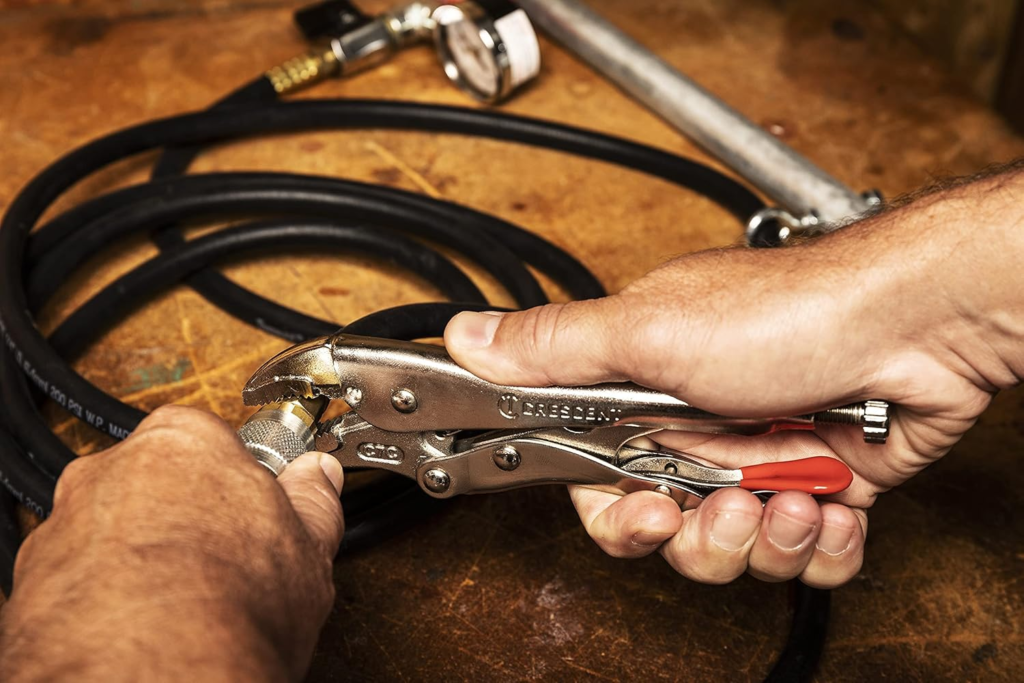
Locking pliers are that tool. You dial in the jaw width, squeeze the handles, and the jaws lock onto whatever you’re gripping with consistent mechanical force regardless of how hard you’re pulling or twisting. I’ve freed bolts with locking pliers that I’d written off as requiring professional help.
The Locking Pliers Set That Handles Every Grip Situation
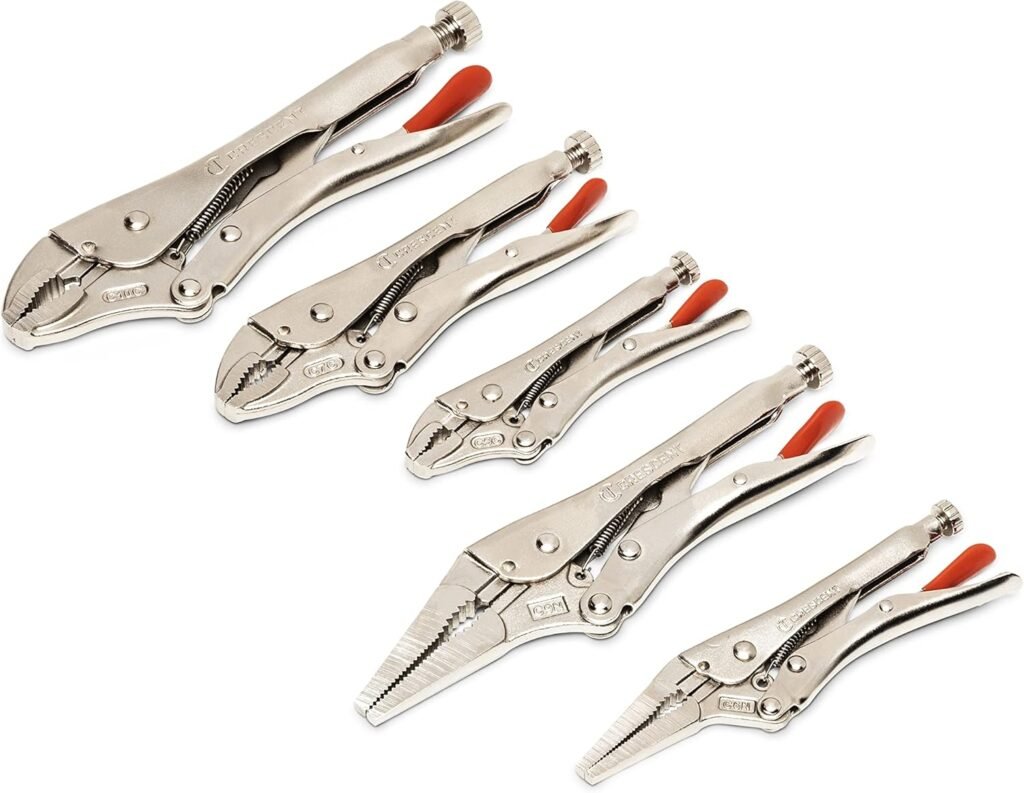
This is one of Amazon’s top-rated locking pliers sets in the $25–$60 range — typically including three to five pieces covering straight jaw, curved jaw, and long-nose configurations in multiple sizes for different applications.
What makes a quality locking pliers set:
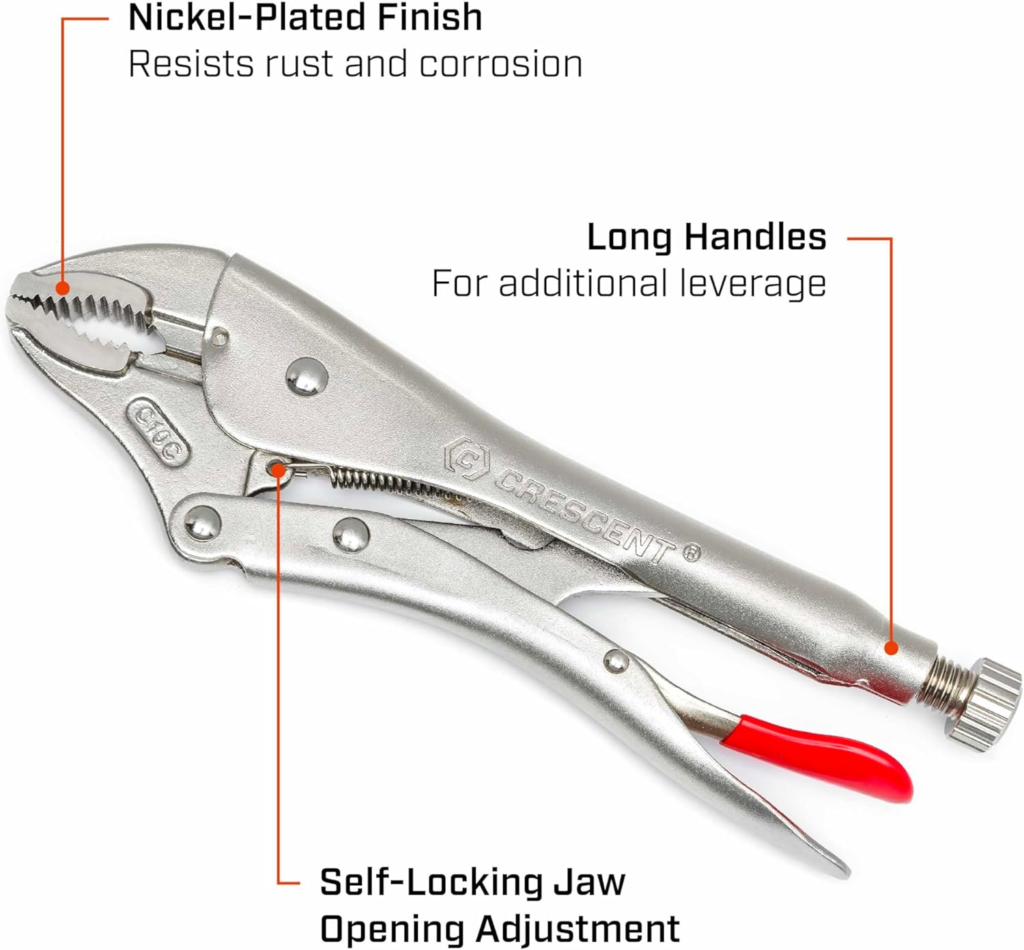
- Hardened steel jaws with machined serrations — grips without slipping even on damaged fasteners
- Precise adjustment wheel: fine-tune jaw width to exact grip diameter before locking
- Over-center locking mechanism: the harder you pull, the tighter the grip — mechanical advantage works for you
- Release lever on handle: unlocks with one squeeze, no prying required
- Multiple jaw styles in one set: straight for flat surfaces, curved for pipes, long-nose for confined spaces
When Locking Pliers Outperform Every Other Tool
Locking pliers aren’t always the right tool — but in specific situations, nothing else works as well:
- Stripped bolt heads: standard wrenches and sockets can’t grip, locking pliers can bite into damaged metal
- Rusted or seized fasteners: sustained clamping force combined with leverage breaks rust-welded threads
- Broken studs: grip the exposed shank of a broken bolt to back it out
- Third-hand tasks: lock pliers onto a part to hold it in position while you work with both hands
- Turning without a wrench: plumbers, HVAC technicians, and automotive mechanics use them constantly for this
For a complete starter toolkit that includes locking pliers alongside the other essential hand tools, the best tool set for homeowners guide covers what belongs in every home repair kit and in what order to buy it.
Before vs. After Having Locking Pliers
Before:
- Stripped bolt head on a fixture — job completely stalled because nothing would grip
- Needing an extra set of hands to hold parts in position while tightening
- Calling a plumber or handyman for jobs that required only proper grip, not expertise
After:
- Stripped lag screw on deck railing backed out with locking pliers in 4 minutes
- Rusted hose clamp removed with curved jaw locking pliers without cutting the hose
- Locked pliers used as a third hand to hold pipe while threading fittings solo
- Confidence to attempt repairs previously considered “professional only”
5 Techniques That Maximize Locking Pliers Effectiveness
- Dial the adjustment wheel until jaws are about 1/8 inch wider than the object — the over-center lock will compress to perfect contact on the grip squeeze.
- For rusted fasteners, apply penetrating oil (PB Blaster or similar) and wait 15–30 minutes before gripping — the combination of chemical loosening and mechanical force is significantly more effective than either alone.
- Use the curved jaw pliers on pipes and round objects — the curved profile creates more contact points than straight jaws and grips more securely.
- When turning a stripped bolt, apply steady rotation rather than jerky force — locking pliers can slip on sudden force spikes. Smooth, continuous pressure is more effective.
- To use as a third hand, dial jaws tight enough that the tool holds its position by spring tension before locking — adjust until the grip is secure without locking yet, then lock in place.
Locking pliers are essential when tackling plumbing repairs and pipe work. The guide to fixing a leaky faucet yourself covers exactly when and how to use locking pliers alongside other plumbing hand tools for common household water fixture repairs.
Q&A: Locking Pliers Questions DIYers Ask
Q: Are locking pliers the same as Vise-Grips?
Vise-Grip is a brand name owned by Irwin Tools that has become generic terminology, like Kleenex for tissues. All locking pliers work on the same over-center mechanism. Quality varies significantly between brands — Irwin, Knipex, and Milwaukee are generally superior to no-name alternatives.
Q: What size should I start with if I’m only buying one?
The 10-inch curved jaw locking pliers is the most versatile single piece — it handles pipes, round stock, odd-shaped fasteners, and general gripping tasks. If you’re buying a set, the 3-piece (straight jaw 6″, curved jaw 10″, long-nose 6″) covers 90% of applications.
Q: Can locking pliers damage what they’re gripping?
Yes — the serrated jaws will mark soft materials like copper pipe, aluminum, and finished surfaces. For delicate materials, wrap the jaws with electrical tape or cloth before gripping. For structural fasteners and rough surfaces, marring is irrelevant.
Q: Why do my locking pliers keep slipping off?
Usually a jaw width adjustment issue — if the jaws are too wide when you lock, the mechanism doesn’t fully engage. Readjust the wheel so jaws are slightly narrower and try again. The lock should feel positive with no play when engaged correctly.
Final Take
Locking pliers are the tool that expands what you can fix. With a set that covers curved jaw, straight jaw, and long-nose, you can handle stripped fasteners, rusted parts, and confined-space gripping challenges that stop a job cold without them.
Clamp it. Lock it. Turn it loose.
Nothing slips. Nothing rounds. Every grip holds.
Affiliate disclosure: This article may contain affiliate links. If you purchase through them, AnythingIsFixable.com may earn a small commission at no additional cost to you.