I spent 45 minutes hanging a gallery wall using a bubble level, measuring tape, and pencil marks. Stepped back to admire my work. Everything was crooked. Not obviously crooked — subtly, infuriatingly off-level in a way that became more visible the longer I looked at it.
A laser level eliminated that problem entirely. Project a horizontal line across the entire wall, hang every piece directly on the line, done in 15 minutes. The precision isn’t better because I got more careful — it’s better because the tool is accurate and the bubble level isn’t.
The Laser Level That Projects a Perfect Reference Line Across Any Wall
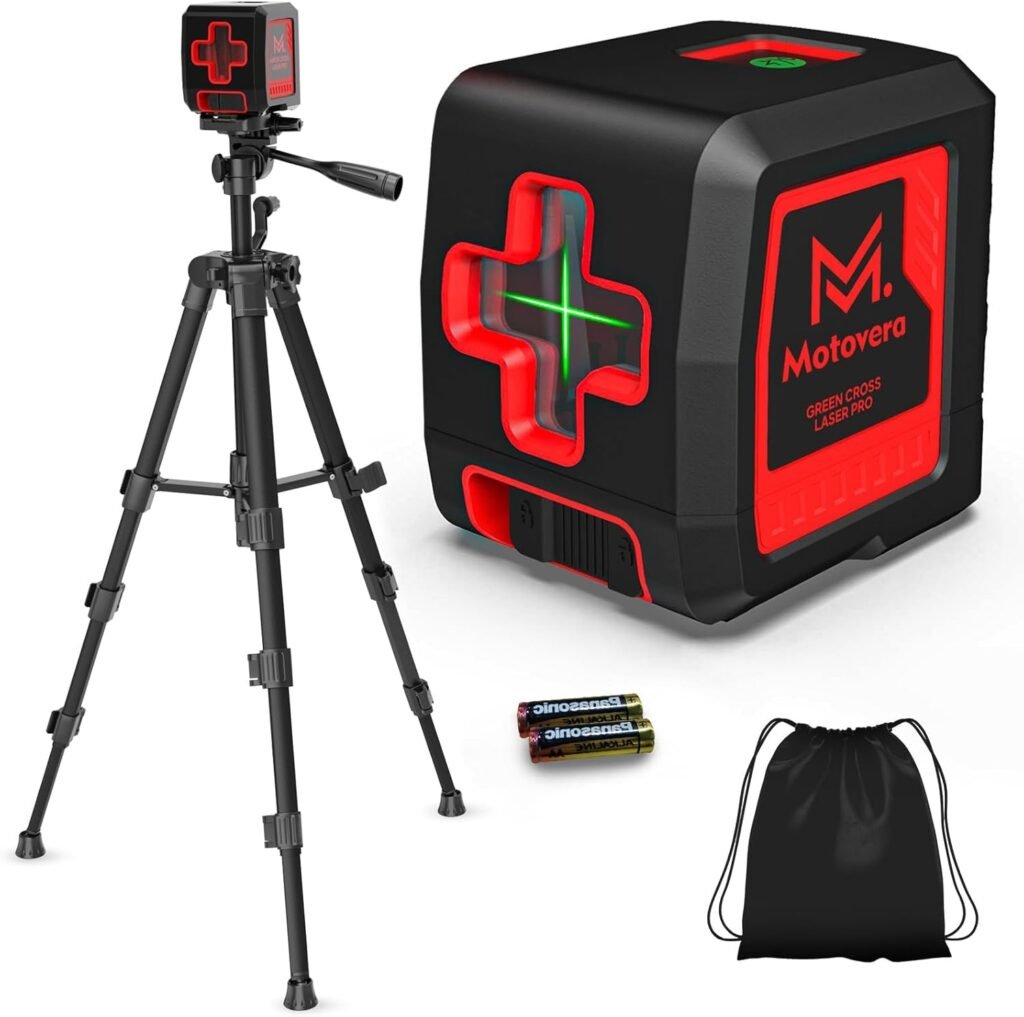
This is one of Amazon’s top-rated laser levels in the $35–$90 range — featuring a self-leveling mechanism that auto-adjusts within 4 degrees, horizontal and vertical line projection, 30+ foot range, and a mounting bracket that attaches to walls or sits on flat surfaces.
What makes a quality laser level worth buying:
- Self-leveling: place it roughly level and the internal pendulum auto-corrects — no manual adjustment needed
- Horizontal and vertical lines: cross-line models project both simultaneously for corner alignment and tiling
- Range of 30–60 feet: visible line across any residential room without repeating setups
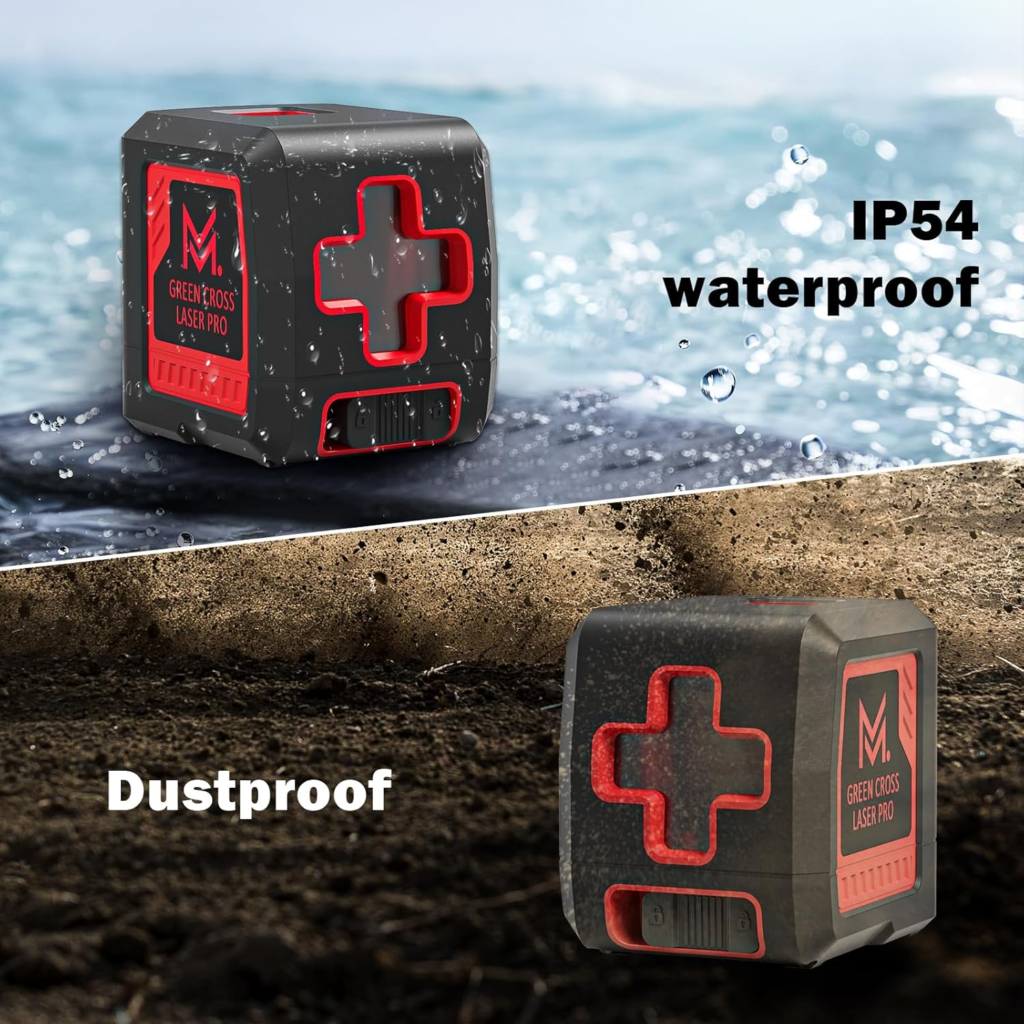
- Pulse mode: outdoor or bright-light use requires pulse mode visible with included detector
- Magnetic mount or tripod thread: attaches to walls, door frames, and tripods for hands-free operation
👉 Click the laser level you’re reading about to check current pricing and range specs on Amazon
Laser Level vs. Bubble Level: Why the Upgrade Matters
A bubble level tells you if one specific point is level. A laser level tells you where level is across the entire room:
- Bubble levels require you to transfer measurements across multiple points — each transfer introduces error
- Laser levels project a continuous reference line — every point on the line is level simultaneously
- Hanging 5 frames with a bubble level requires 15+ measurements; a laser level requires one setup
- Tile, flooring, drop ceilings, and chair rail installations all require consistent level reference over long distances where bubble levels fail
A laser level pairs directly with proper wall mounting techniques. The best tool set for homeowners guide covers the complete toolkit where a level, stud finder, and drill work together for any wall installation project.
Before vs. After Using a Laser Level
Before:
- Gallery wall hung with bubble level and tape measure — subtly off-level, visible after stepping back
- Shelf installation requiring multiple rehang attempts to get consistent height across brackets
- Tile backsplash reference lines drawn by hand — grout lines drifting by the end of the row
After:
- Gallery wall hung in 15 minutes by placing frames directly on the projected line
- Floating shelf brackets installed at identical height using the line as a guide — zero measuring required
- Chair rail installation using laser line as continuous reference — consistent height across 40-foot room
- Tile layout line projected for perfect first-row alignment that cascades correctly through the entire installation
5 Projects That Become Easy With a Laser Level
- Gallery walls: project a horizontal line at hanging height, place picture hooks directly on the line. No measuring, no pencil marks, no rehang.
- Floating shelves: project the line at shelf height, mark both bracket positions on the line simultaneously. Brackets are guaranteed at identical height.
- Tile installation: project a vertical line at the room’s center or a starting point. First column of tile aligned to the line means every subsequent row stays true.
- Drop ceilings: project lines at ceiling grid height around the entire perimeter. No measuring — attach wall angle track directly to the projected line.
- Chair rail and wainscoting: project a continuous horizontal line at rail height across every wall. Cut and install trim pieces directly against the line.
For more complex wall projects involving anchoring into studs, the guide to fixing a leaky faucet yourself demonstrates the same precision-first approach — proper measurement and reference before any permanent fastening.
Q&A: Laser Level Questions DIYers Ask
Q: What does self-leveling mean, and do I need it?
Self-leveling means the laser contains a weighted pendulum that auto-adjusts the beam to true level within a small range (typically 4 degrees). If you place the unit slightly off-level, it corrects itself. Non-self-leveling models require manual adjustment and a vial check — self-leveling is worth the small price premium for most buyers.
Q: How far does a laser level reach?
Indoor use in normal lighting: 30–60 feet depending on model. In bright sunlight or at distance, pulse mode with a detector extends range to 100+ feet. For home DIY, standard mode is sufficient for any room.
Q: Is a laser level accurate enough for tile work?
Yes — quality self-leveling laser levels are accurate to 1/8 inch at 30 feet, which exceeds the precision of hand measurement for tile layout. The consistency over distance is what matters — a laser line doesn’t drift the way transferred measurements do.
Q: Can I use it outdoors?
In shade or overcast conditions, the beam is visible outdoors at normal ranges. In direct sunlight, you need pulse mode and a detector. Most mid-range laser levels include pulse mode; check specs before outdoor use.
Final Take
A laser level is the tool that makes the difference between a project that looks professional and one that looks like it was done at home. The line is accurate, continuous, and fast — and once you’ve used one, measuring and transferring points by hand feels like deliberate self-sabotage.
Project the line. Work to it. Level every time.
One setup. Perfect reference. No remeasuring required.
Affiliate disclosure: This article may contain affiliate links. If you purchase through them, AnythingIsFixable.com may earn a small commission at no additional cost to you.