The first time I tried cutting plywood with a jigsaw, it was a disaster. Wobbly lines, rough edges, and two ruined boards later — I finally bought a proper circular saw.
Night and day difference. Clean cuts, straight lines, fast work. This is the saw that belongs in every DIYer’s garage.
The Cordless Circular Saw Built for Real DIY Work
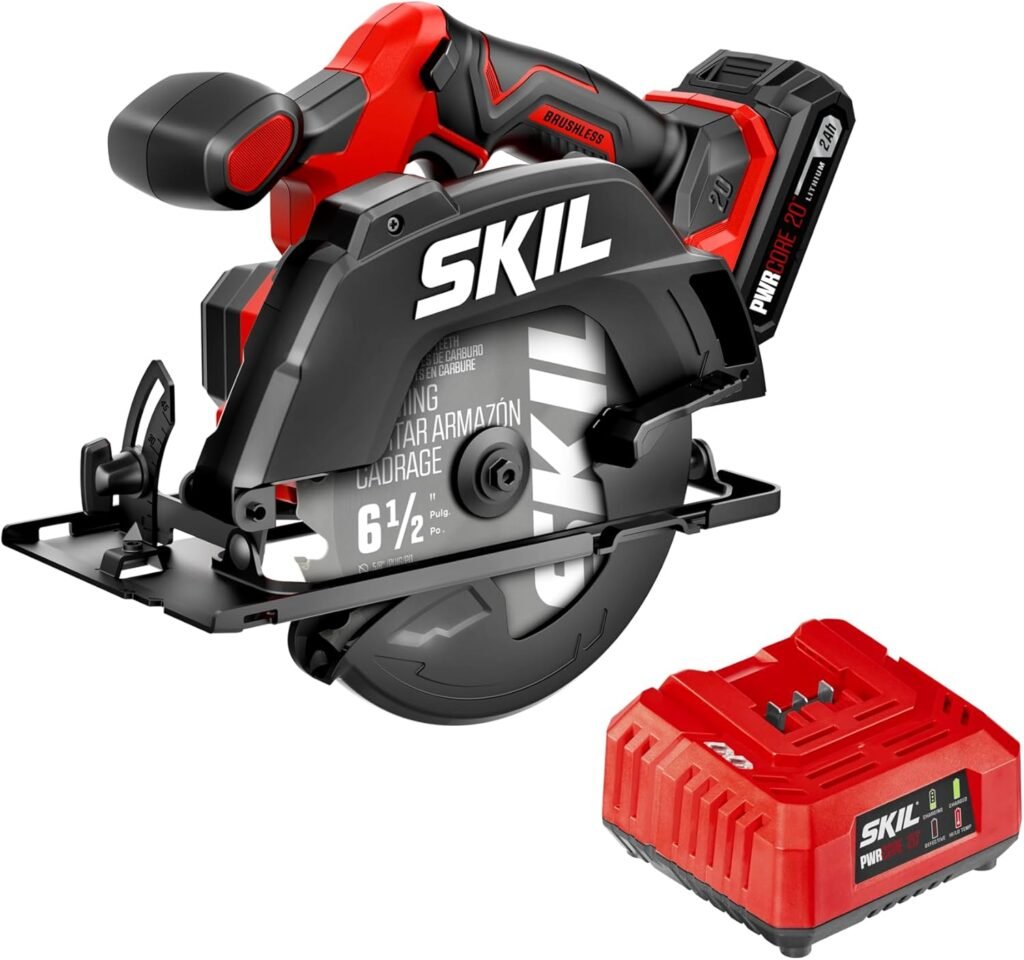
This is one of Amazon’s top-rated cordless circular saws in the $80–$150 range — designed to handle hardwood, plywood, OSB, and dimensional lumber without the cord slowing you down.
What sets it apart:
- 6-1/2″ blade for full-depth cuts up to 2-1/2″
- Brushless motor for longer run time and durability
- Bevel adjustment up to 56 degrees for angled cuts
- Battery compatibility with popular tool ecosystems
- Lightweight design that reduces fatigue on longer projects
What You Can Cut With This Saw
A quality circular saw handles the cuts that most other tools can’t do as efficiently:
- Plywood and OSB sheet goods — straight rip cuts with a guide
- 2×4 and 2×6 dimensional lumber — fast, clean crosscuts
- Hardwood flooring — precision cuts for installation
- Decking boards — outdoor projects with no cord to trip on
- Trim and molding — with the right blade
If you’re putting together a proper toolkit, the $59 circular saw review on AnythingIsFixable gives more detail on blade selection and technique.
Before vs. After Adding a Circular Saw
Before:
- Using a jigsaw for everything — slow and inaccurate
- Hiring cuts at the hardware store
- Avoiding projects that required precise sheet cuts
- Borrowing a neighbor’s saw and working around their schedule
After:
- Sheet goods ripped in under a minute
- Complete deck boards cut in the yard without extension cords
- Faster project completion — less time prepping, more time building
- Confident taking on larger builds
Safety and Technique Tips for Beginners
- Always use a rip fence or straight-edge guide for long cuts — freehanding is how mistakes happen.
- Let the blade reach full speed before entering the cut.
- Support both sides of the cut to prevent the wood from pinching the blade.
- Keep fingers well away from the blade path — mark your cut line clearly.
- Wear eye protection and hearing protection on every cut.
For projects that also require precision fastening, the $70 pocket hole jig system pairs perfectly with a circular saw for furniture builds.
Q&A: Circular Saw Questions DIYers Ask
Q: Do I need a corded or cordless saw?
For most DIY projects, cordless is better — the mobility more than compensates for any power difference in modern brushless motors.
Q: What blade should I start with?
A 24-tooth framing blade for rough cuts and a 40-tooth blade for cleaner finish work covers most needs.
Q: Is 6-1/2″ the right size?
Yes — it’s the industry standard for good reason. It cuts standard lumber and sheet goods with ease.
Q: Can a beginner use this safely?
Absolutely — follow basic safety protocols, use a guide for straight cuts, and take your time.
Final Take
A quality circular saw removes the ceiling from what you can build at home. Decks, furniture, shelving, flooring — the saw makes all of it accessible.
If you only own one power saw, make it this one.
Straight cuts. Clean results. Every project.
Affiliate disclosure: This article may contain affiliate links. If you purchase through them, AnythingIsFixable.com may earn a small commission at no additional cost to you.