There is a particular frustration in dropping a screw for the fourth time into a wall cavity, or having it fall off the driver tip just before contact, or trying to start a screw in a tight space with one hand while the other braces whatever you’re assembling. A non-magnetic screwdriver set causes all of these problems routinely.
Magnetic-tipped screwdrivers eliminate them. The screw sits on the tip, stays on the tip, and drives in cleanly regardless of angle or access. I didn’t realize how much friction non-magnetic drivers created until I switched and every single one of those failure modes vanished.
The Magnetic Screwdriver Set Built for One-Handed, Any-Access Work
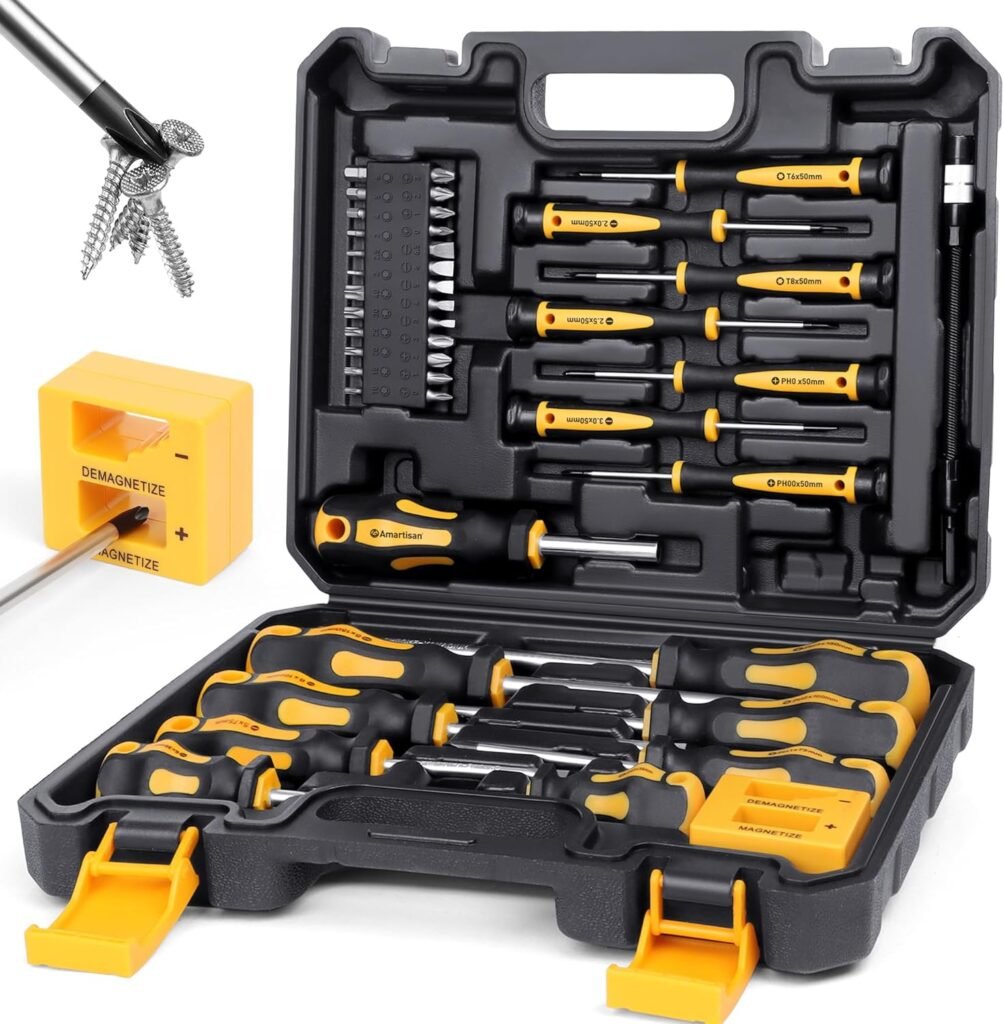
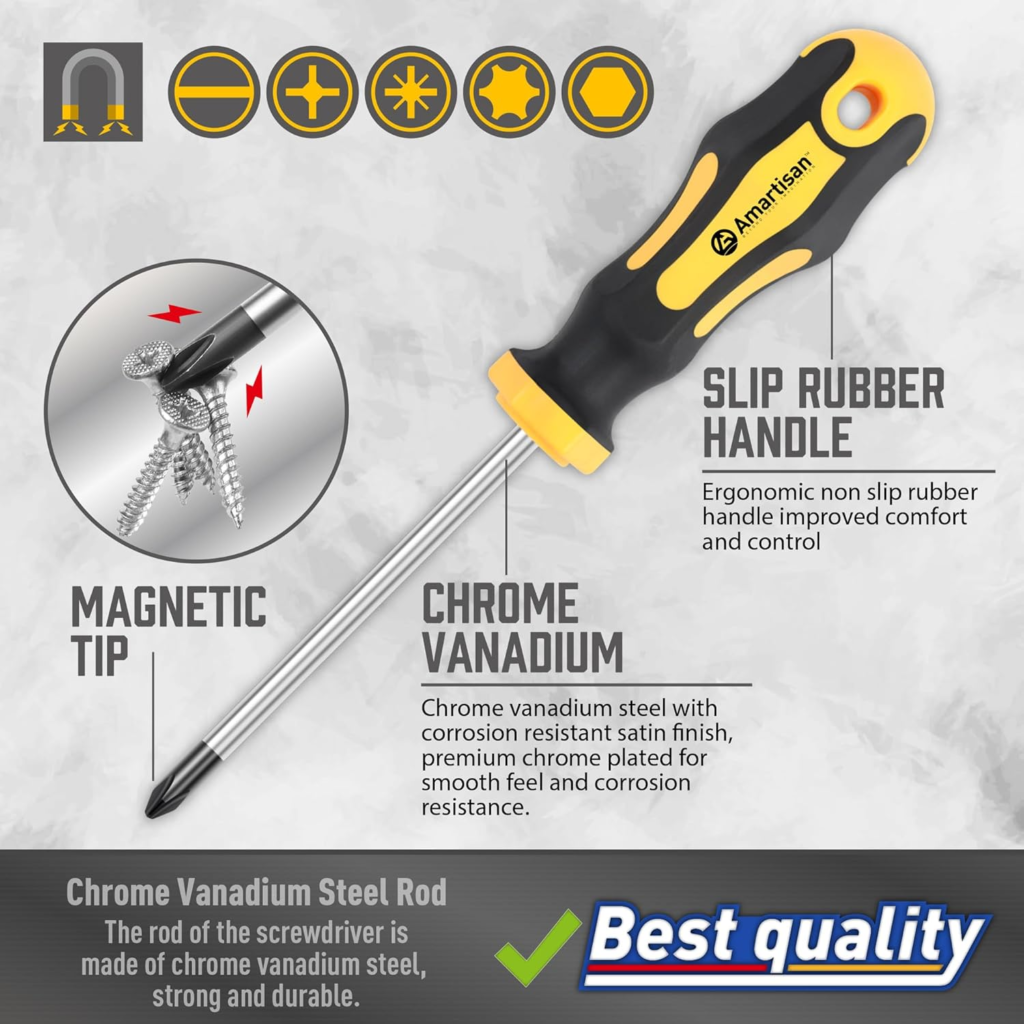
This is one of Amazon’s top-rated magnetic screwdriver sets in the $25–$60 range — typically including 6–12 pieces covering Phillips, flathead, Torx, and Robertson heads in multiple sizes, with magnetized tips, comfortable ergonomic handles, and a storage case.
What makes a quality magnetic screwdriver set:
- Tip magnetism rated 30+ gauss: strong enough to hold screws at any angle including inverted
- Hardened S2 or CR-V steel tips: resist cam-out and deformation on tight fasteners
- Ergonomic handle with grip zones: reduces hand fatigue and increases torque on stubborn screws
- Size variety: #1 and #2 Phillips, 1/4″ and 3/8″ flathead at minimum; Torx T15, T20, T25 for electronics and appliances
- Organized storage case: keeps sizes accessible and tips protected from blunting
Why Magnetic Tips Change the Entire Experience of Hand Fastening
Magnetic screwdriver tips affect every step of driving a fastener:
- Screw pickup: pick up screws from a surface one-handed without needing to balance them on the tip
- Screw starting: position the screw in the hole with the driver without a second hand holding the screw
- Driving in confined spaces: angle and one-hand access work because the screw cannot fall off mid-drive
- Overhead work: gravity no longer causes screw loss on inverted or elevated installations
A quality screwdriver set is foundational to any home toolkit. The best tool set for homeowners guide covers how screwdrivers, pliers, and a hammer form the core hand tool kit that handles 80% of home repair tasks.
Before vs. After Switching to a Magnetic Set
Before (non-magnetic):
- Screw drops into wall cavity during installation — retrieval requires fishing tools or giving up
- Two-hand requirement for starting screws in tight spaces
- Overhead installation frustrating and slow due to gravity-assisted screw loss
- Tip cam-out on cheap steel tips, rounding screw heads on stubborn fasteners
After (magnetic):
- Screws held at any angle, including inverted — overhead work now single-handed and fast
- Outlet covers, switch plates, and light fixtures installed significantly faster
- Furniture assembly using one hand to hold parts and one hand with the driver — no screw-holder required
- Hardened tips driving stubborn screws without cam-out or tip deformation
5 Tasks That Magnetic Screwdrivers Make Significantly Easier
- Outlet and switch plate installation: start the tiny mounting screws one-handed while holding the plate with the other. Non-magnetic drivers require a third hand.
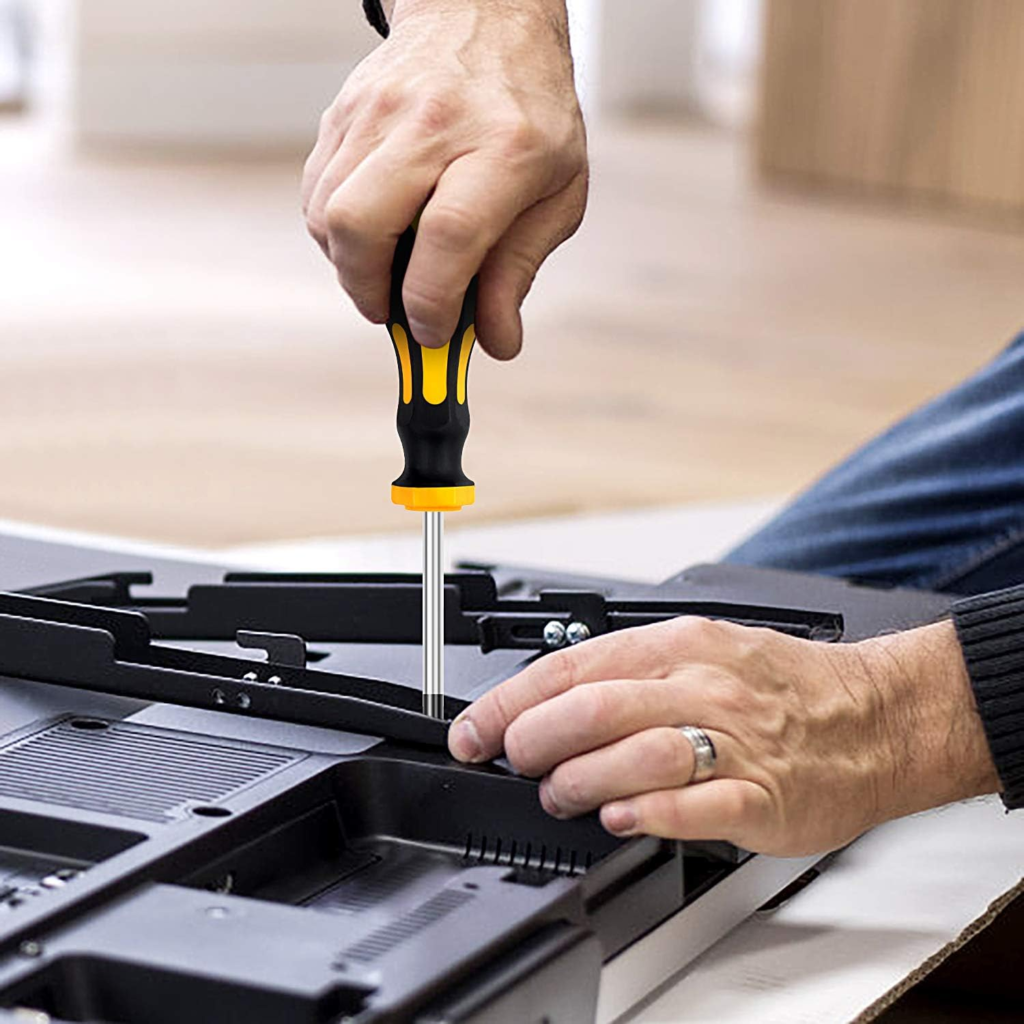
- Furniture assembly: flat-pack furniture often requires driving screws at awkward angles into pre-drilled holes. Magnetic tips let you guide the screw into the hole without it falling off.
- Appliance repair: electronics and appliances use Torx and Phillips screws in tight cavities. Magnetic tips navigate confined spaces without dropping screws into the unit.
- Cabinet hardware installation: hinge and pull screws in cabinet interiors require driving at angles. Magnetic tips hold the screw on the bit during positioning.
- HVAC filter housing and access panels: overhead and sidewall panels with multiple screws are fast with magnetic drivers. Remove all screws one-handed without dropping any.
Screwdrivers pair directly with drill bits for versatile fastening. The best hammer drill for masonry guide covers when a hand screwdriver is the right tool vs. a powered driver, and why both have a place in a complete toolkit.
Q&A: Magnetic Screwdriver Questions Homeowners Ask
Q: Will a magnetic screwdriver damage electronics?
Standard screwdriver tip magnetism (30–60 gauss) poses no practical risk to hard drives, phones, or circuit boards. The field is too weak and too localized. Avoid placing rare-earth magnets near storage media, but standard screwdriver tips are safe for all consumer electronics work.
Q: How many screwdrivers do I actually need?
For 90% of home repairs: #2 Phillips (the universal size), #1 Phillips (electronics and small fasteners), 1/4″ flathead, and 3/16″ flathead. Adding T20 and T25 Torx covers automotive and appliance work. A 6-piece set covering these sizes handles virtually every household fastening situation.
Q: What steel type should I look for?
CR-V (chrome vanadium) or S2 steel tips are the standard quality benchmark. S2 is harder and more impact-resistant, preferred for high-torque or impact driver use. CR-V is adequate for all hand tool applications. Avoid sets that don’t specify steel type — they’re usually lower grade.
Q: Can I re-magnetize a screwdriver that has lost its magnetism?
Yes — run a strong rare-earth magnet along the shaft from handle to tip, repeatedly, in one direction. 10–20 passes restores useful magnetism. Screwdrivers lose magnetism from heat, being dropped, or exposure to demagnetizing fields, but re-magnetization is a 30-second fix.
Final Take
Magnetic screwdrivers are one of those upgrades that immediately make every fastening task easier in ways that accumulate significantly over time. One-handed work, confined space access, and overhead installation all become routine rather than frustrating with tips that actually hold the screw.
Pick up. Hold. Drive. Never drop another screw.
Magnetic tip. One hand. Any angle. Done.
Affiliate disclosure: This article may contain affiliate links. If you purchase through them, AnythingIsFixable.com may earn a small commission at no additional cost to you.