There are tools you use occasionally and tools you reach for constantly once you own them. An angle grinder is firmly in the second category.
Cutting metal, grinding welds flush, removing rust, shaping stone — it handles tasks that no other tool in the shop can replicate. I use mine multiple times a week.
The Angle Grinder That Handles Real Metal Work
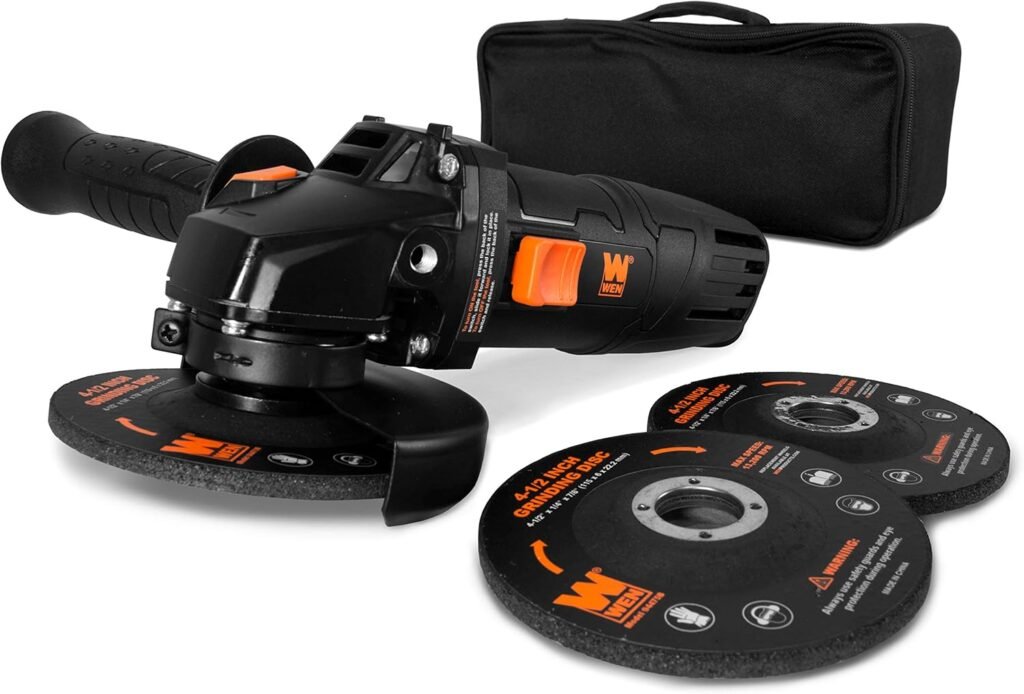
This is one of Amazon’s top-rated angle grinders in the $60–$130 range — built for fabrication, grinding, cutting, and surface preparation across metal, stone, concrete, and tile.
What makes a quality angle grinder worth owning:
- 4-1/2″ disc size — the most versatile for home use
- 7–9 amp motor that doesn’t bog down under load
- Adjustable guard for wheel-specific positioning
- Tool-free guard adjustment for fast wheel changes
- Paddle or lock-on switch depending on your work style
- Compatible with cutting, grinding, flap, and wire wheel discs
What an Angle Grinder Can Do That Other Tools Cannot
The angle grinder fills a very specific set of tool needs:
- Cutting steel rod, angle iron, and rebar cleanly
- Grinding welds flush for professional-looking metal fabrication
- Removing rust and old paint from metal surfaces
- Sharpening lawn mower blades, axes, and chisels
- Cutting tile and stone with the appropriate disc
- Removing mortar between bricks for repointing
For heavy cutting work on wood and structural materials, the $225 reciprocating saw on AnythingIsFixable complements the angle grinder for a complete cutting toolkit.
Before vs. After Having an Angle Grinder in the Shop
Before:
- Cutting metal rod with a hacksaw — exhausting and slow
- Rust removal by hand with wire brushes — hours of work
- Weld seams left visible because grinding them flush wasn’t practical
- No way to sharpen blades at home
After:
- 4″ steel rod cut in 10 seconds
- Rusty gate brackets cleaned in 5 minutes
- Weld seams ground flush and undetectable
- Lawn mower blade sharpened in 3 minutes every season
Safety Rules for Angle Grinder Use
- Always wear a full face shield — not just safety glasses. Disc failures are violent.
- Inspect every disc for cracks or chips before use — damaged discs can shatter at high RPM.
- Never use a cutting disc for grinding, or vice versa — discs are engineered for specific load orientations.
- Secure the workpiece firmly — an angle grinder creates significant torque reaction.
- Keep the guard in place — it’s positioned to deflect sparks and fragments away from your body.
An angle grinder pairs well with a good wet/dry vac for cleanup. The wet-dry shop vac review handles metal shavings, grinding dust, and general shop mess.
Q&A: Angle Grinder Questions DIYers Ask
Q: Corded or cordless angle grinder?
Corded for sustained grinding work — consistent power with no battery concern. Cordless for occasional use where mobility matters. Most serious users own both.
Q: What size disc should I start with?
4-1/2″ is the most versatile home size — easier to control than a 7″ disc and adequate for most DIY and light fabrication work.
Q: Can a beginner use this safely?
Yes, with proper safety gear and technique. The angle grinder has a higher respect requirement than most hand tools — understand it before using it.
Q: What discs should I buy to start?
A metal cutting disc (thin), a grinding disc (thick), and a flap disc for surface finishing cover 90% of common uses.
Final Take
An angle grinder is the tool that makes metal work possible at home. Before I had one, metal was something I avoided in DIY projects. Now it’s just another material I can work with confidently.
If your shop is missing one, fix that.
Cut. Grind. Polish. Build anything.
Affiliate disclosure: This article may contain affiliate links. If you purchase through them, AnythingIsFixable.com may earn a small commission at no additional cost to you.