A circular saw is great for straight lines. But curves? Arcs? Cutouts for outlets and sink holes? You need a jigsaw.
I added one to my shop last year and immediately started building things I couldn’t have touched before — rounded furniture legs, cabinet cutouts, even decorative wood shapes. The right jigsaw unlocks an entirely new category of projects.
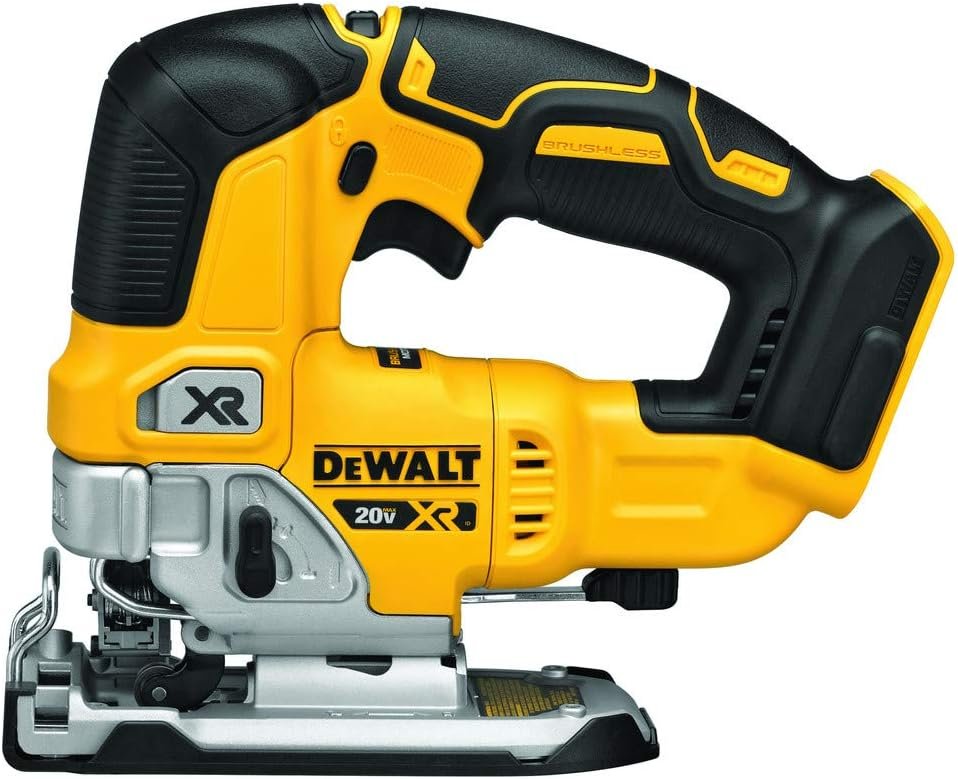
The Variable-Speed Jigsaw Built for Precision Work
This is one of Amazon’s top-rated jigsaws in the $60–$130 range — designed to handle wood, plywood, metal, and plastics with adjustable orbital action and variable speed control.
What makes it stand out:
- Brushless motor of the cordless jigsaw delivers efficient performance for longer runtime (vs. DCS331 Jig Saw)
- Compact size for easy grip and maximum control of the jig saw
- Bright LED on the jigsaw tool helps illuminate dimly lit work surfaces
- Variable speed trigger and dial provide precise speed control
- All-metal, lever-action keyless blade change allows for quick and easy t-shank blade changes
- Integrated dust blower helps clear line of sight while cutting
- 4-position orbital action provides control of cut quality and speed
👉 Click the jigsaw you’re reading about to check current pricing and blade compatibility on Amazon
What a Jigsaw Can Cut That Other Saws Cannot
The jigsaw’s strength is maneuverability:
- Curved lines and organic shapes in wood
- Interior cutouts — sink holes, electrical outlets, ductwork
- Metal sheets, thin aluminum, and conduit
- Plastic and laminate — countertop modifications
- Tight radius cuts impossible with larger saws
For heavier straight-line work, the $225 reciprocating saw review on AnythingIsFixable complements the jigsaw perfectly for a complete cutting toolkit.
Before vs. After Adding a Jigsaw
Before:
- Limited to straight cuts — circular saw and miter saw only
- Drilling multiple holes and filing to approximate curves
- Hiring out any project that required curved elements
- Avoiding countertop cutouts entirely
After:
- Sink cutout for bathroom vanity done in 20 minutes
- Custom furniture shapes without outsourcing
- Decorative wood pieces that look genuinely professional
- Full-range cutting toolkit that handles most home projects
Tips for Cleaner Jigsaw Cuts
- Slow down at corners and curves — the blade needs time to track the line.
- Use the right blade for the material: wood blades for wood, bi-metal for metal, fine-tooth for plastics.
- Tape the cut line with painter’s tape before marking — it reduces splintering on finished faces.
- Support the workpiece close to the cut to minimize vibration.
- Cut slightly outside your line and sand to final fit for precision projects.
A jigsaw and a good stud finder work great together for wall projects. The $48 stud sensor review explains how to locate structural elements before cutting.
Q&A: Jigsaw Questions DIYers Ask
Q: Corded or cordless jigsaw?
Corded models provide more consistent power for metal cutting; cordless is better for mobility in larger workspaces. For most DIYers, cordless wins.
Q: How do I cut a perfect circle?
Use a circle-cutting jig attachment, or trace with a compass and cut just outside the line then sand to shape.
Q: Can it cut countertop laminate?
Yes — use a fine-tooth blade and cut slowly, keeping the base plate flat against the surface.
Q: Is it dangerous for beginners?
A jigsaw is among the safest power saws for beginners. The blade moves up and down rather than laterally, and it’s easy to control.
Final Take
A jigsaw is the missing tool in most beginner workshops. It doesn’t replace your other saws — it completes them.
Once you have the ability to cut curves, the range of projects you can tackle expands dramatically. This is the saw that makes it possible.
Curves. Cutouts. Creativity unlocked.
Affiliate disclosure: This article may contain affiliate links. If you purchase through them, AnythingIsFixable.com may earn a small commission at no additional cost to you.